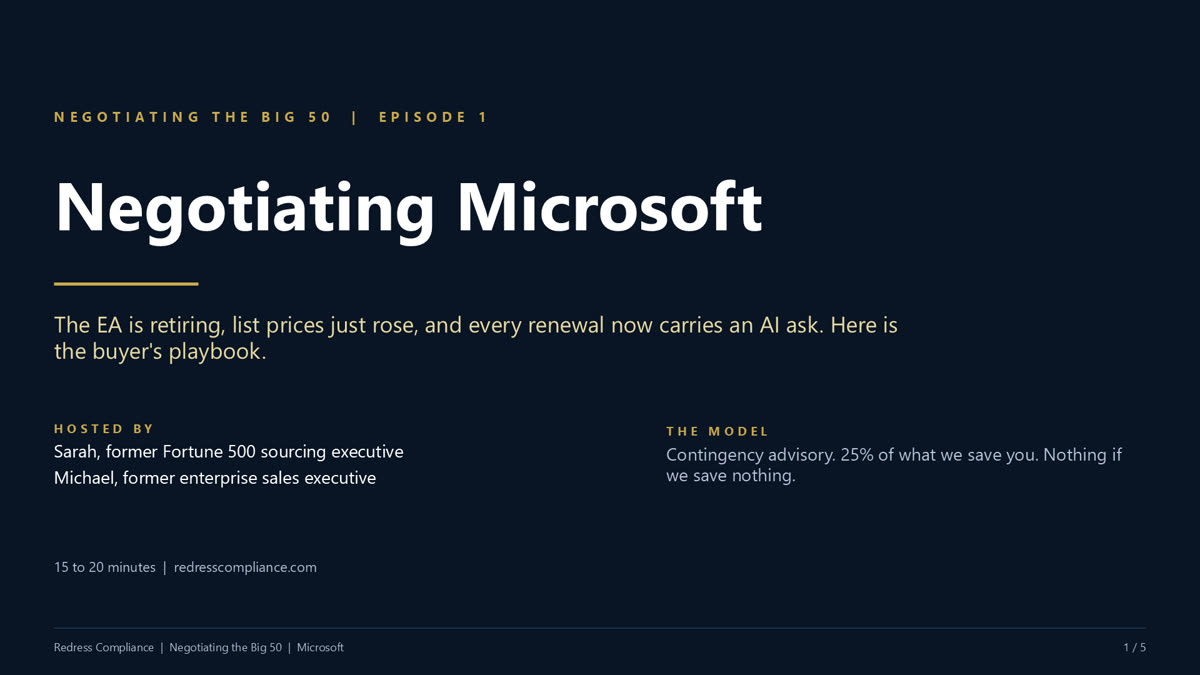
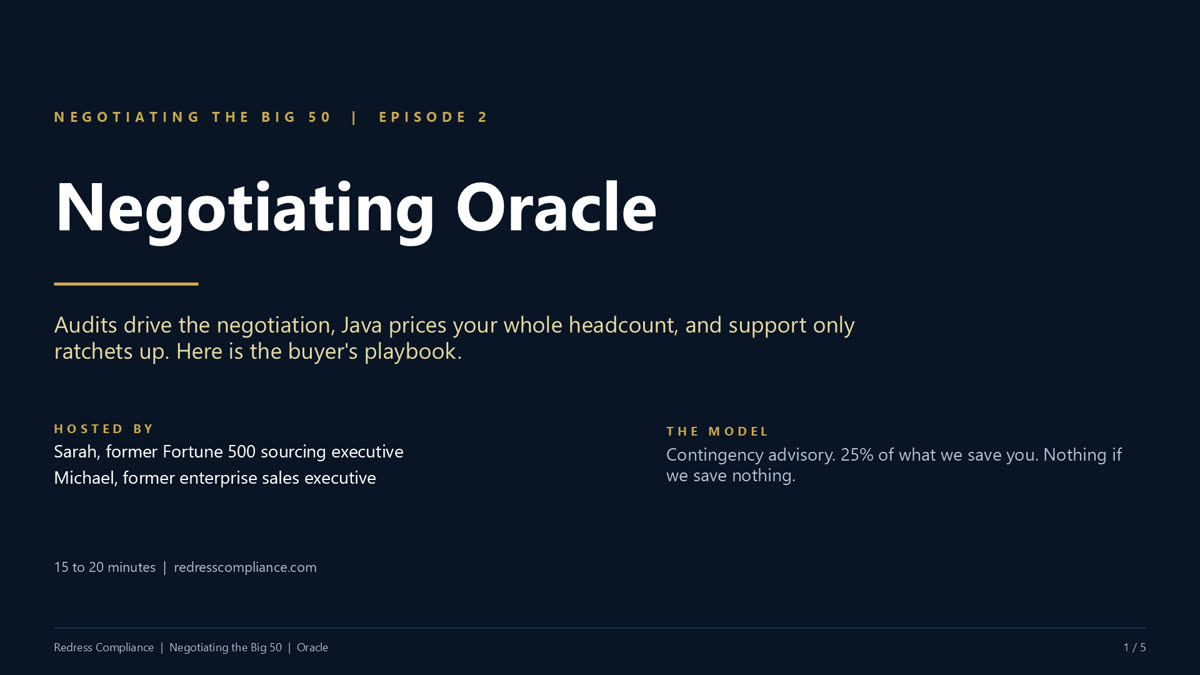
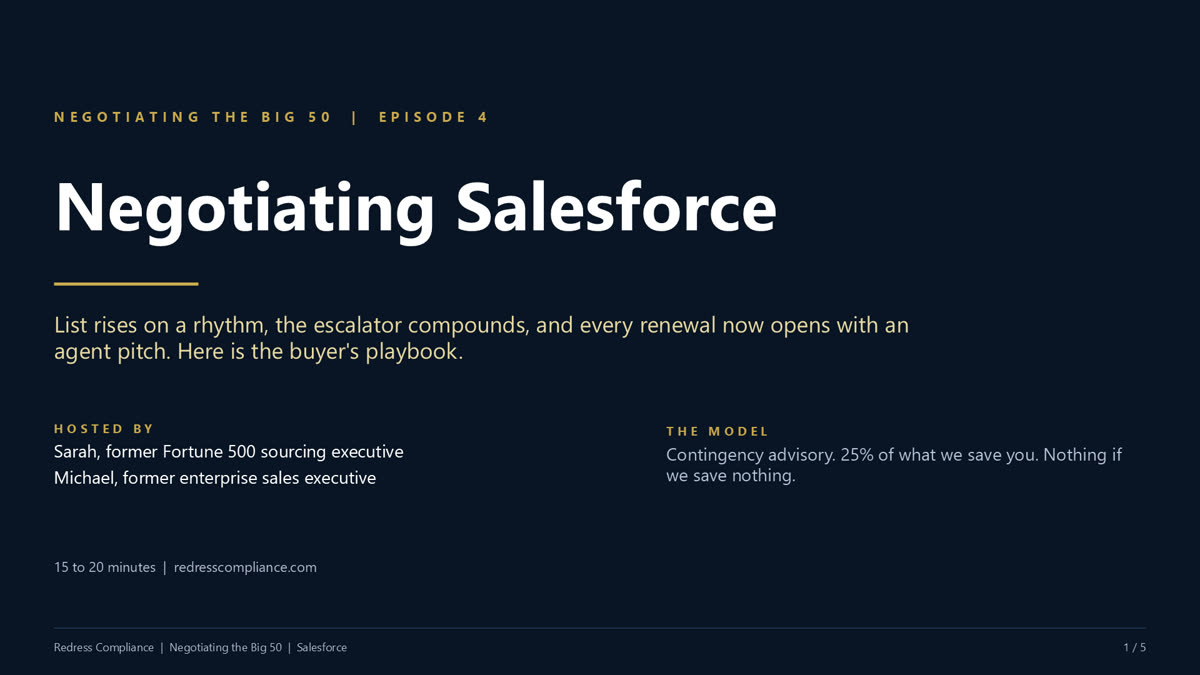
An excellent product with a pricing model that punishes organisations who do not watch it. A fifteen minute session on where the meters are, the three drivers behind almost all bill shock, and the five structural asks that are worth more than several points of discount.
The first three minutes are open to everyone. Tell us who you are and the rest plays straight away, no approval, no waiting.
We have your details. If the video does not resume, refresh the page and it will pick up where you left off.
Customers tell us more often about Datadog than any other vendor that they do not understand their own bill, which is a remarkable thing to hear about software you chose. It is not a failing of the finance team. There are many products, each metered differently, and consumption is generated by engineering decisions that are never framed as purchasing decisions. The recurring pattern is an organisation that starts with a modest proof of concept and several years later carries a seven figure annual commitment with no clear account of how it happened.
Almost all of the surprise comes from three drivers: container cardinality, where every unique tag combination creates a billed series and a useful tag added by a well intentioned engineer multiplies the count; log retention, chosen once and generously on the assumption that keeping more is safer; and application monitoring unit drift, where normal modernisation raises your billable unit count without anybody deciding to buy more. All three are sound engineering decisions with unpriced commercial consequences, which is why the answer is showback rather than restriction.
The most valuable part of the session is the five structural asks, none of which is a discount. A pooled commitment drawn against any product rather than separate per product pools. A negotiated overage rate, because the standard fifty percent premium above your annual rate can cost you more than the discount saved you. An ingest band lock on logs. Container peak smoothing against a rolling average rather than the daily peak. And consumption reporting in a form finance can read.
Every line jumps the player to that point.
The model. Redress Compliance works on contingency. You negotiate with the vendor first. When you have gotten everything you can get, bring the deal to Redress and we take 25 percent of what we save you beyond your best number. Nothing saved, nothing paid. Talk to us.
New sessions, new vendor briefings, and the buyer side analysis behind them. One email, no vendor marketing, unsubscribe in a click.