The one category where the discount matters less than the shape of what you are signing. A nineteen minute session on the access problem, what is genuinely negotiable when the price is not, the commitment trap in a market where capability keeps getting cheaper, and why Palantir's leverage disappears during the pilot.
The first three minutes are open to everyone. Tell us who you are and the rest plays straight away, no approval, no waiting.
We have your details. If the video does not resume, refresh the page and it will pick up where you left off.
These are young commercial organisations carrying large revenue on very thin enterprise sales headcount, measured in dozens rather than thousands and aimed at a small number of very large deals. Where a traditional vendor at comparable revenue would assign you a named account team, an overlay specialist and a customer success manager, here you may have a shared inbox. Below the attention line, a great many enterprises end up buying through the website on a credit card, which costs them the terms rather than the price.
The session is deliberately honest about what cannot be told with precision. There is no reliable discount table here, and anyone offering one is guessing. What can be said with confidence is where the flexibility actually sits. Token and model pricing is close to fixed. Contract structure is wide open: commitment size and measurement, the annual price increase cap, credit mechanics and expiry, termination rights, data handling, and the usage reporting and spend controls without which you cannot manage the cost at all.
The strongest recommendation in the session concerns the term. Three things are unstable at once, the price of capability, the models themselves, and any forecast of consumption, and they compound. Prefer twelve months over thirty six even at a worse headline rate, insist on a most favoured pricing clause, and get model substitution rights. Palantir is treated separately because it behaves differently: the bootcamp is cheap, the ontology work creates switching cost before price is ever discussed, and the clauses that matter, ontology documentation, egress in open formats and priced transition assistance, are negotiable at signature and close to unobtainable at renewal.
Every line jumps the player to that point.
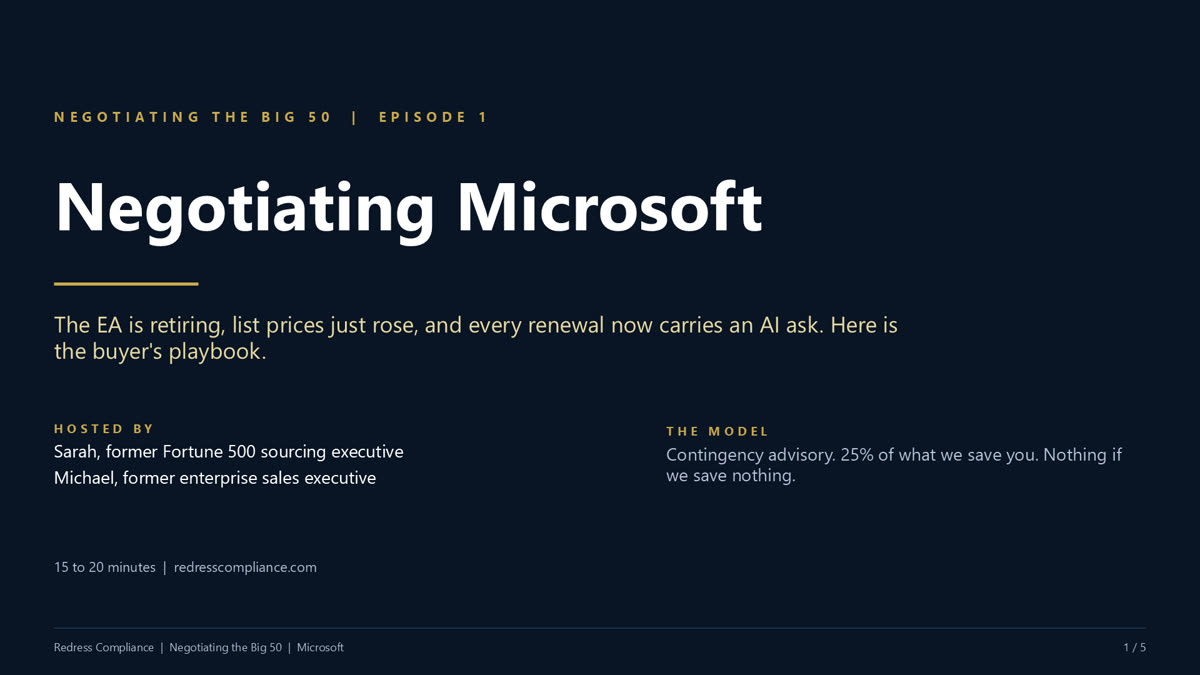
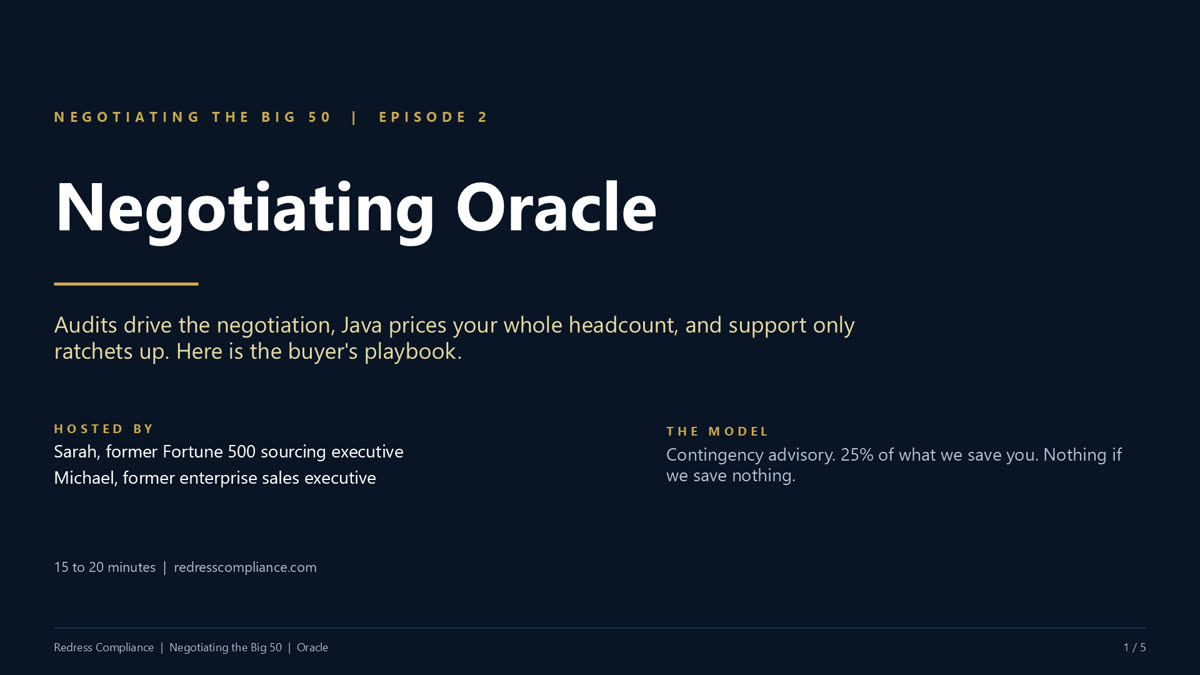
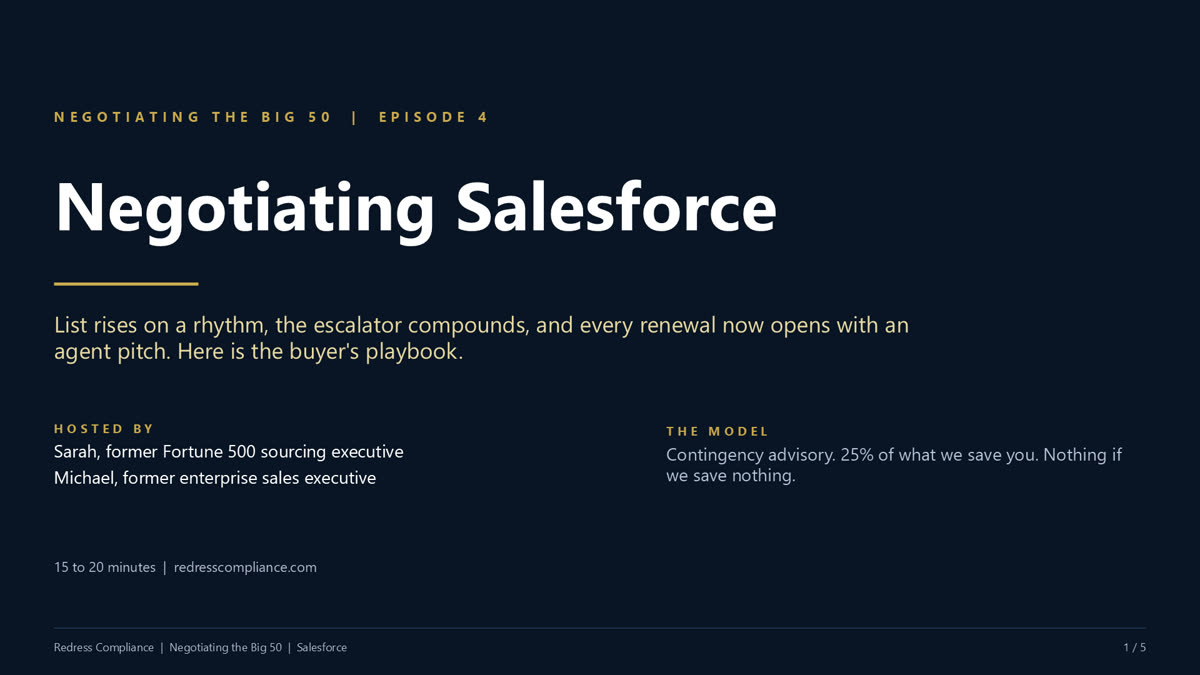
The model. Redress Compliance works on contingency. You negotiate with the vendor first. When you have gotten everything you can get, bring the deal to Redress and we take 25 percent of what we save you beyond your best number. Nothing saved, nothing paid. Talk to us.
New sessions, new vendor briefings, and the buyer side analysis behind them. One email, no vendor marketing, unsubscribe in a click.