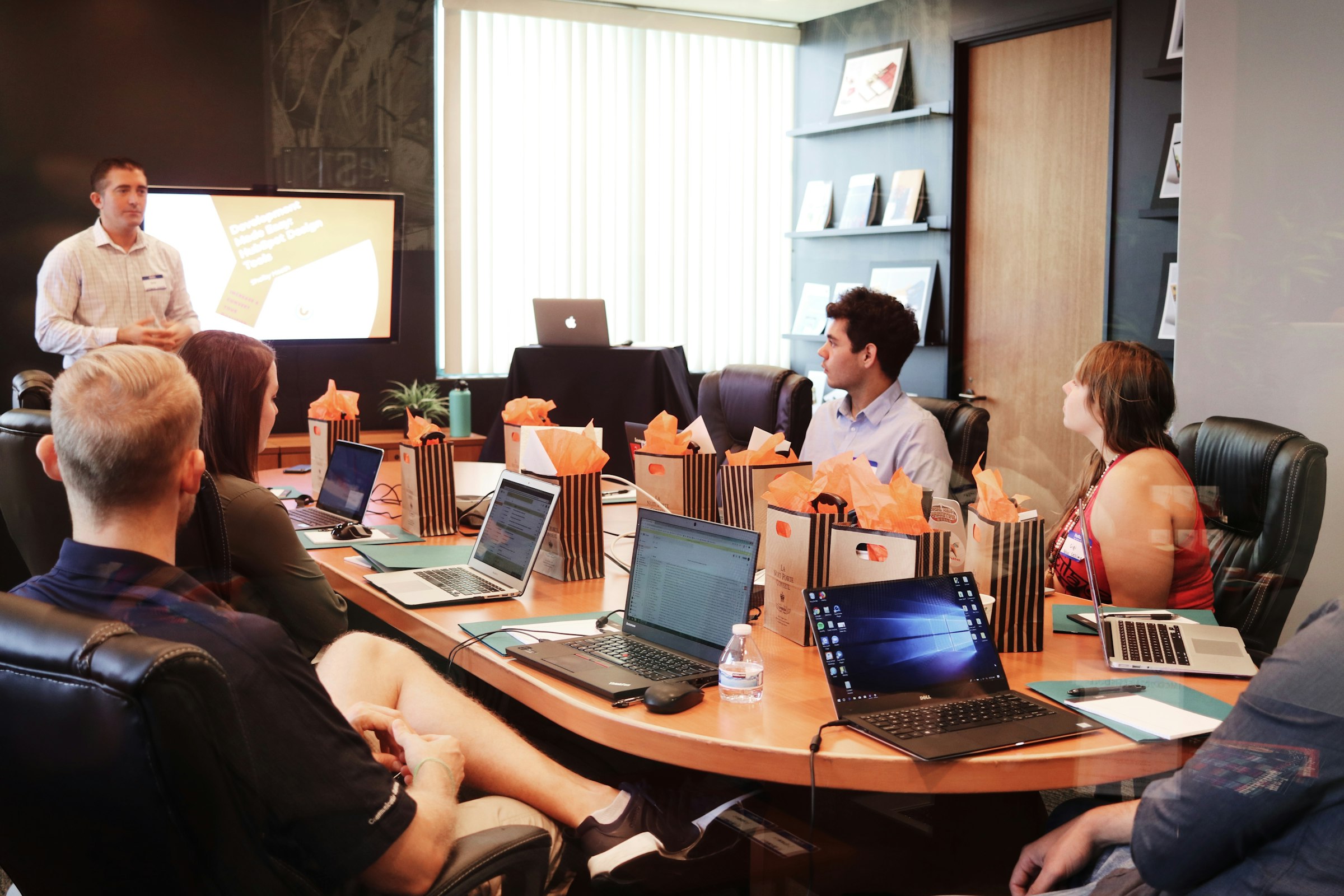
Editorial photograph of an Oracle Database 23ai engineering review
Oracle · Database 23ai · White Paper

Oracle Database 23ai. The buyer side licensing framework.

A working framework for CIOs, database leaders, data architects, procurement teams, and finance teams licensing Oracle Database 23ai across Enterprise Edition, Standard Edition 2, the option mix, the AI Vector Search workload, the JSON Relational Duality footprint, the Property Graph footprint, the 19c migration window, the audit posture, and the renewal commercial commitment. Cut Database 23ai cost by twenty five to forty percent through edition mix discipline, option deactivation, NUP rightsizing, audit response, and migration leverage.

Contact Us All White Papers
25 to 40%Database 23ai cost reduction
April 202719c Premier Support end

Now that you have the framework

Apply it to your Oracle situation.

25 minute call with our Oracle practice lead. We will walk through your specific renewal, audit, or contract and tell you what we would do next. No follow up sales pressure unless you ask for one.

Industry Recognized
500+ Enterprise Clients
$2B+ Under Advisory
11 Vendor Practices
100% Buyer Side Independent

A working framework for CIOs, database leaders, data architects, procurement teams, and finance teams licensing Oracle Database 23ai. Five buyer side moves cut Database 23ai cost by twenty five to forty percent against the opening Oracle proposal, in line with five hundred plus engagements.

Executive Summary

Oracle Database 23ai is the current Long Term Support release of the Oracle Database. It replaces 19c as the strategic LTS target. AI is baked into the engine, not added as an option.

The release lands in 2024 and the install base shifts heavily during 2025 and 2026. Premier Support on 19c ends April 30, 2027. Most large estates must complete the 23ai upgrade plan before that cliff.

The license model is unchanged. Per Processor at forty seven thousand five hundred US dollars list. Named User Plus at nine hundred fifty US dollars list with documented NUP minimums per processor. Options price separately and stack against the EE base.

The buyer side framework cuts Oracle Database 23ai commercial commitment by twenty five to forty percent through edition mix discipline, option deactivation, NUP rightsizing, audit response posture, and 23ai migration leverage against the opening Oracle proposal.

The headline numbers

  • 25 to 40 percent recovery band against the Database 23ai opening commercial proposal
  • USD 47,500 Enterprise Edition list rate per processor under the Oracle Core Factor Table
  • USD 950 Enterprise Edition list rate per Named User Plus, with twenty five NUP per processor minimum
  • April 30, 2027 Oracle Database 19c Premier Support end date
  • 15 to 30 percent typical option over allocation against documented usage
  • USD 23,000 Partitioning option list rate per processor, often the largest single option line
  • 500+ Oracle engagements behind the framework

The most valuable move is opening the Database 23ai commercial review window twelve to eighteen months ahead of the 19c support cliff with documented entitlement baseline, deployment inventory, option usage map, NUP reconciliation, and audit response posture inside the procurement file.

Default Oracle posture frames the migration as a product upgrade. The buyer side posture frames the migration as a contract renegotiation event. Read the related Oracle ULA Decision Framework, the Oracle services, the Oracle knowledge hub, the Oracle Cloud at Customer strategy, the Oracle Database ULA negotiation, the Oracle ULA negotiation playbook, and the Oracle Java SE employee licensing.

Background and Market Context

Oracle released Database 23ai in early 2024 as the strategic Long Term Support release. The release consolidated work on AI, JSON Relational Duality, Property Graph, Globally Distributed Database, True Cache, and the next generation Multitenant container architecture.

The product positioning shifted with the rebrand from 23c to 23ai. AI is now part of the core engine. Vector Search arrives at no additional cost on Enterprise Edition. The change recasts how AI workloads sit inside the licensed database footprint.

The support timeline drives the upgrade pressure. Oracle Database 19c was the previous LTS and remains the dominant install base. Premier Support on 19c ends April 30, 2027. Extended Support runs to April 30, 2030 at a twenty percent fee uplift. Market Driven Support runs beyond, without bug fixes.

The release timeline

The Database release timeline matters because it sets the commercial pressure window. Oracle uses the support cliff as the lever. The buyer side framework anticipates the lever and prices it into the commercial discussion.

ReleaseGA datePremier Support endExtended Support endStatus today
11g R2September 2009January 2015December 2020Out of support
12c R1July 2013July 2018July 2022Out of support
12c R2March 2017November 2020March 2022Out of support
18cFebruary 2018June 2021June 2022Out of support
19c (LTS)February 2019April 30, 2027April 30, 2030Dominant install base
21c (Innovation)August 2021April 30, 2026April 30, 2026Skip target for most
23ai (LTS)May 2024April 30, 2032April 30, 2035Strategic LTS target

The 23ai release also tightens cloud authorized language. Oracle Authorized Cloud Environments cover AWS, Azure, OCI, and Google Cloud under specific licensing rules. Edge cases on outposts, on premise extensions of public clouds, and hybrid VMware estates remain contested. Buyers should document deployment topology before any commercial discussion opens.

Customer experience across the 19c to 23ai transition shapes Oracle account team behavior. Account teams target high spend customers with bundled propositions tying 23ai to Cloud at Customer subscriptions, to ULA renewals, or to options uplift. The buyer side framework anticipates these motions and decouples each commercial event.

Industry exposure also shifts. Financial services, telecom, and public sector lead the 23ai adoption curve due to AI Vector Search workloads. Healthcare and pharma follow on Property Graph and clinical data workloads. Retail and manufacturing trail on the cost driven workload patterns where Standard Edition 2 remains an attractive alternative for non critical estates.

The list price framework

Oracle Database 23ai keeps the same list price framework as prior LTS releases. The Per Processor and Named User Plus metrics remain. The Core Factor Table still applies to multicore servers running outside Oracle authorized cloud environments.

ComponentList rate per processorList rate per NUPNUP minimum per processor
Enterprise EditionUSD 47,500USD 95025
Standard Edition 2USD 17,500 per socketUSD 35010
PartitioningUSD 11,500USD 230EE NUP minimums apply
Advanced CompressionUSD 11,500USD 230EE NUP minimums apply
Advanced SecurityUSD 15,000USD 300EE NUP minimums apply
Diagnostics PackUSD 7,500USD 150EE NUP minimums apply
Tuning PackUSD 5,000USD 100EE NUP minimums apply
Real Application ClustersUSD 23,000USD 460EE NUP minimums apply
Active Data GuardUSD 11,500USD 230EE NUP minimums apply
MultitenantUSD 17,500USD 350EE NUP minimums apply
In MemoryUSD 23,000USD 460EE NUP minimums apply
Spatial and GraphUSD 17,500USD 350EE NUP minimums apply

Read the Oracle services, the Oracle knowledge hub, the Oracle Cloud at Customer strategy, the Oracle Fusion ERP negotiation, the Oracle multicloud universal credits, the Oracle ULA Decision Framework, and the multi vendor negotiation scorecard.

The Edition and Option Framework. The License Reconciliation

The edition and option framework is the largest commercial line in any Database 23ai discussion. Enterprise Edition carries the bulk of the spend. Options stack on top and frequently inflate the total by sixty to one hundred percent.

Enterprise Edition lists at forty seven thousand five hundred US dollars per processor and nine hundred fifty US dollars per Named User Plus. Standard Edition 2 is significantly cheaper but capped at two sockets per server and excludes most enterprise options. The edition split decision drives the rest of the framework.

Edition mix discipline

Most large enterprises license Enterprise Edition by default. The default is rarely optimal. A disciplined edition mix moves test, dev, departmental, and edge workloads off EE wherever the option footprint is not required.

  • Map every database to its required option footprint. Pull the option usage report from each database. Identify which databases truly use Partitioning, Advanced Compression, Advanced Security, Diagnostics Pack, Tuning Pack, Real Application Clusters, Active Data Guard, or Multitenant. Map the result against the edition decision.
  • Move qualifying databases to Standard Edition 2. Workloads without RAC, Partitioning, In Memory, or large compression footprints are SE2 candidates. The license rate drops by sixty to seventy percent against EE.
  • Consolidate on Multitenant where it pays. Multitenant consolidation reduces footprint and option spread but requires the Multitenant option. Run the math on consolidation savings against the Multitenant license line.
  • Retire shelfware EE deployments. Databases with no measured usage in the prior twelve months are decommission candidates. Reclaim the license entitlements ahead of the next renewal cycle.
  • Document the edition baseline. Maintain a one row per database edition ledger inside the procurement file. Reconcile against the contracted entitlement quarterly.

Option deactivation

Option deactivation is the second largest lever. Oracle separately charges every option. Many options activate by accident through DBA actions, default initialization parameters, or vendor recommended settings. The framework audits and deactivates unused options.

  • Run the option usage script monthly. Oracle provides usage tracking via DBA_FEATURE_USAGE_STATISTICS. Run the script monthly across the entire estate. Capture results in a versioned report inside the procurement file.
  • Quarantine the high risk options. Partitioning, Advanced Compression, Advanced Security, Diagnostics Pack, Tuning Pack, and Real Application Clusters lead the audit findings. Deactivate any of those that show zero use in the prior quarter.
  • Block accidental activation. Configure database parameters to block accidental option triggers. Document the parameter standard inside the operations runbook.
  • Engineer purposeful activation only. Treat every option activation as a deliberate engineering decision with documented business value, license cost approval, and explicit DBA sign off.
  • Reconcile against entitlements quarterly. Maintain an option entitlement ledger. Reconcile active option usage against owned entitlements every quarter ahead of the audit window.

NUP rightsizing

Named User Plus licenses scale on user count rather than processors. NUP minimums per processor still apply, but the metric works for workloads with bounded user populations. NUP rightsizing reduces the per processor uplift on smaller workloads.

  • Run the NUP test on every database. Compare NUP cost (users plus minimums times nine hundred fifty USD) against Per Processor cost. Pick the cheaper metric on each database.
  • Document the NUP user definition. Oracle counts authorized human users, batch users, and non human operated devices. Document the count methodology and the included population definition inside the procurement file.
  • Audit indirect access risk. Multiplexing through application servers does not reduce NUP counts. Document every application that connects to the database and the upstream user population it represents.
  • Cap NUP growth contractually. Contract a NUP true up cap inside the master agreement. Avoid open ended user growth exposure at audit time.

The AI Vector Search and Property Graph Framework

Oracle Database 23ai folds AI Vector Search, JSON Relational Duality, and Property Graph into the Enterprise Edition base. The change matters commercially. Workloads that previously required separate vector databases, graph databases, or document stores can now consolidate onto the licensed Oracle footprint.

AI Vector Search is included with Enterprise Edition at no additional license fee. Property Graph is now part of the core platform. JSON Relational Duality ships in the base. The consolidation opportunity is large but the audit surface area also expands.

AI Vector Search workloads

Vector Search enables similarity search across embeddings stored as VECTOR datatype columns inside the database. RAG pipelines, semantic search, recommendation engines, and fraud pattern detection all map to the workload.

  • Evaluate consolidation against external vector stores. Pinecone, Weaviate, Milvus, and Qdrant compete on cost per million vectors per month. Run the comparison against the Oracle 23ai consolidated footprint where Enterprise Edition is already licensed.
  • Document the vector workload baseline. Capture embedding count, vector dimensionality, query rate, and index size per database. Use the baseline against future capacity planning.
  • Watch the indirect option risk. Vector workloads on partitioned tables, compressed tables, or RAC clusters trigger the underlying option licenses. Map the workload pattern against the option footprint.
  • Contract the AI Vector inclusion explicitly. The inclusion is part of EE today. Contract the inclusion language inside the master agreement to lock against future repackaging.

Property Graph and Globally Distributed Database

Property Graph supports graph workloads natively. Globally Distributed Database supports sharded deployments across multiple sites. Both expand the licensed surface but both raise the audit exposure.

  • Run Property Graph on existing EE entitlements where the workload fits. Avoid the Neo4j or Amazon Neptune commercial commitment where the existing Oracle footprint can absorb the workload.
  • Map the Globally Distributed Database licensing footprint. Each shard runs as a separate Database instance. License each shard appropriately. Document the shard topology in the entitlement ledger.
  • Contract the True Cache positioning. True Cache supports read scaling. It does not replace Active Data Guard for DR. Treat them as distinct licensing decisions.
  • Document JSON Relational Duality usage. The feature lets applications read the same data as JSON or relational. The licensing footprint stays under Enterprise Edition.

Definitions: features included in 23ai EE base

  • AI Vector Search with VECTOR datatype, similarity search, and IVF and HNSW indexes
  • JSON Relational Duality for unified document and relational views
  • Property Graph as a core feature, not a separate option
  • True Cache for read scaling without full standby investment
  • Globally Distributed Database for sharded global deployments
  • Oracle Machine Learning in database algorithms and Notebooks

The 19c to 23ai Migration Framework. The Upgrade Window as a Lever

The migration window is the single largest commercial lever the buyer side framework holds against Oracle in 2026 and 2027. Oracle uses the 19c support cliff to push contract extensions, ULA conversions, Cloud at Customer commitments, and option uplifts. The framework turns the lever back on Oracle.

Premier Support on 19c ends April 30, 2027. Most large estates need eighteen to twenty four months for a complete 23ai migration. The migration plan needs to be in motion no later than the first half of 2025 for an April 2027 completion.

Migration sequencing

The migration sequence dictates the commercial leverage point. A staged migration with documented progress generates more leverage than a forced last minute upgrade.

  • Phase one in 2025. Test, dev, training, and lab environments move to 23ai first. Capture compatibility findings, performance regression patterns, and option behavior changes.
  • Phase two in early 2026. Non production environments and lower tier production workloads move next. Refine the migration runbook and validate the rollback paths.
  • Phase three through 2026. Production tier two and tier three databases migrate. Stage by application family rather than by infrastructure cluster.
  • Phase four in early 2027. Tier one mission critical OLTP migrates last. Run parallel on 19c and 23ai through the cutover window. Validate before retiring 19c.
  • Phase five through 2027. Edge databases and acquisition footprints retire to 23ai or decommission entirely.

Commercial leverage points

The migration timeline maps directly to commercial leverage events. Each phase carries a buyer position against Oracle. Use the events deliberately.

  • Demand 23ai eligibility at signing on 19c orders. Any 19c license order signed today must include 23ai upgrade rights without additional fees. Contract the right at signing.
  • Use the migration as renewal leverage. Oracle wants migration progress reported quarterly. The reporting becomes a leverage moment for renewal terms.
  • Force Oracle to scope the support continuity. Contract documented support continuity through the migration window with no service degradation language.
  • Reject the bundled Cloud at Customer push. Oracle uses the 23ai migration to push Cloud at Customer subscription deals. Separate the technical migration from the deployment model decision.
  • Convert ULA risk into migration credit. If a ULA exists, the 23ai migration is the exit window opportunity. Run the ULA certification work alongside the migration plan.

Technical migration risks

The 23ai migration carries technical risk beyond the commercial lever. Plan for compatibility issues, performance regressions, and option behavior changes.

  • Compatibility testing across the application portfolio. 23ai is largely backward compatible with 19c, but specific PL/SQL, optimizer behavior, and JSON handling changes require application level testing.
  • Performance baselining ahead of the cutover. Capture 19c performance baselines per application. Validate 23ai performance against the same load shapes.
  • Option behavior changes. Some options are restructured in 23ai. Validate that the deployment intent matches the new behavior pattern.
  • Vendor application certification. SAP, Oracle E Business Suite, Oracle Fusion Applications, third party ISV applications. Each carries certification timelines for 23ai. Map every certification against the migration plan.

The Audit and Compliance Framework. The Defensive Posture

Oracle audit risk does not disappear with the 23ai migration. It changes shape. The new feature surface area expands what Oracle LMS scripts can detect. The defensive posture must adapt.

Oracle LMS audits typically run on a three to five year cycle. The audit demands an entitlement reconciliation against deployed usage. Findings on options, NUP minimums, indirect access, virtualization, and feature activation drive the audit penalty.

Audit response posture

The audit response posture is the single most important compliance discipline. Default reactive response posture produces large audit settlements. Structured proactive posture neutralizes most audit risk.

  • Maintain a live entitlement ledger. One row per product, edition, option, and metric. Tie each row to the contract source. Reconcile every quarter.
  • Run pre audit option scripts quarterly. Use Oracle published DBA_FEATURE_USAGE_STATISTICS plus a documented internal script. Capture results in a versioned report.
  • Control LMS access scope. Limit Oracle LMS auditor access to the smallest possible scope. Do not give blanket SYS or DBA credentials. Run scripts under a controlled audit account.
  • Document the indirect access perimeter. Map every application that reaches the database. Document the upstream user population for each. Apply NUP counting rules consistently.
  • Contract audit cooperation terms. Cap audit frequency, scope, notice period, and response window inside the master agreement. Avoid open ended audit cooperation language.

Virtualization and cloud audit risk

Virtualization remains the single largest Oracle audit pressure point. VMware vSphere, Nutanix AHV, KVM, Hyper V, and major public cloud deployments all carry contested licensing positions inside Oracle audits.

  • Document the virtualization architecture. Hard partition versus soft partition matters. Document host pinning, affinity rules, and cluster boundaries inside the procurement file.
  • Run the licensing math both ways. Oracle position frequently demands cluster wide licensing. The buyer position uses host pinning and affinity rules. Document the math on both positions.
  • Pin to Oracle authorized cloud where appropriate. AWS, Azure, OCI, and Google Cloud are Oracle authorized cloud environments. Specific licensing rules apply. Use them when they favor the buyer.
  • Defend the public cloud licensing position. Oracle frequently contests Database licensing on AWS and Azure outside the Oracle authorized cloud language. Document the deployment posture and the contract terms that govern it.

Common Mistakes and Traps

The Database 23ai commercial discussion at the upper enterprise scale carries documented common mistakes the buyer side framework corrects.

  1. Treating the 23ai migration as a product upgrade rather than a contract renegotiation event. Default IT posture frames 23ai as a software upgrade, scheduled on the technical calendar. The corrective move treats the 23ai migration as the largest Oracle commercial leverage window for the next four years. Stage commercial wins alongside the migration phases. Recovery typically lands in the fifteen to twenty five percent range against the total Oracle Database spend.
  2. Accepting Enterprise Edition by default for every database. Default sizing licenses every database on EE because that is the contracted standard. The corrective move audits each database for its actual option footprint and moves qualifying workloads to Standard Edition 2 or to consolidated Multitenant containers. Recovery typically lands in the twenty to thirty percent range against the EE baseline on the migrated workloads.
  3. Ignoring accidental option activation across the estate. Default operations posture allows DBAs to activate options without procurement approval. The corrective move runs the option usage script monthly, quarantines unused options, blocks accidental activation through parameter standards, and reconciles against entitlements quarterly. Recovery typically lands in the ten to twenty percent range against the option spend, plus reduced audit exposure.
  4. Failing to license AI Vector Search inclusion explicitly in the master agreement. Oracle includes AI Vector Search with Enterprise Edition today. The inclusion can be repackaged in future releases. The corrective move contracts the inclusion explicitly inside the master ordering document with version forward language. Recovery protects against future repackaging risk worth millions across a large estate.
  5. Accepting cluster wide licensing on virtualized estates. Default Oracle audit posture demands cluster wide processor licensing on VMware deployments. The corrective move documents the virtualization architecture, runs the licensing math both ways, contracts host pinning and affinity rules, and defends the position with documented evidence. Recovery typically lands in the thirty to sixty percent range against contested virtualization license claims.
  6. Skipping the structured commercial review window ahead of the 19c support cliff. Default posture frames the migration as a thirty to ninety day discovery exercise close to the cliff. The corrective move opens the commercial review eighteen to twenty four months ahead of April 2027 with documented entitlement baseline, deployment inventory, option usage map, and audit response posture inside the procurement file.

Five Recommendations from Redress Compliance

  1. Demand the 23ai upgrade right on every 19c order and contract version forward language for AI Vector Search, Property Graph, and JSON Relational Duality inclusion inside the master agreement. Block Oracle attempts to repackage features that ship with Enterprise Edition today. Contract the inclusion language at signing with documented Enterprise Edition feature baseline. Recovery protects against future packaging risk on the entire EE estate. Review the inclusion language at every renewal anniversary. Document the baseline inside the procurement file.
  2. Convert qualifying databases to Standard Edition 2 or Multitenant consolidated containers ahead of the 23ai migration cutover window. Audit each database for its actual option footprint. Move test, dev, departmental, and edge workloads off Enterprise Edition wherever the option footprint allows. Run the consolidation math on Multitenant where consolidation savings exceed the option license cost. Recovery typically lands in the twenty to thirty percent range against the EE baseline on the migrated workloads. Apply during the 23ai migration sequencing.
  3. Document the option usage baseline quarterly, quarantine unused options, and block accidental activation through parameter standards across the entire Oracle Database estate. Run DBA_FEATURE_USAGE_STATISTICS plus a documented internal usage script every quarter. Capture the result in a versioned report. Deactivate any option with zero use across the prior quarter. Recovery typically lands in the ten to twenty percent range against the option spend with reduced audit exposure. Track the option ledger inside the procurement file.
  4. Reject the bundled Cloud at Customer or ULA push that Oracle attaches to the 23ai migration discussion and stage the technical migration on a separate track from the deployment model decision. Decouple the 23ai version decision from the Cloud at Customer subscription decision. Decouple the ULA conversion discussion from the migration timeline. Stage each as an independent commercial conversation with its own discovery, evidence, and decision criteria. Recovery typically protects fifteen to thirty percent of the total Oracle commitment value across a three year window.
  5. Document the virtualization architecture, run the licensing math both ways, contract host pinning and affinity rules, and defend the deployment posture against Oracle audit claims with documented evidence inside the master agreement. Map every virtualized Database deployment. Capture cluster boundaries, affinity rules, host pinning configuration, and cloud authorized environment status. Contract the licensing position in the master ordering document. Recovery typically lands in the thirty to sixty percent range against contested virtualization license claims. Refresh the documentation every six months.

Frequently Asked Questions

What is Oracle Database 23ai?

Oracle Database 23ai is the current Long Term Support release of the Oracle Database, succeeding 19c as the strategic LTS. It introduces AI Vector Search, JSON Relational Duality, Property Graph as a core feature, and Globally Distributed Database. License model remains per processor and Named User Plus.

How is Database 23ai licensed?

Oracle Database 23ai licenses on a per processor metric using the Oracle Core Factor Table, or on a Named User Plus metric with documented minimum NUP counts per processor. List price for Enterprise Edition is forty seven thousand five hundred US dollars per processor and nine hundred fifty US dollars per Named User Plus.

Is AI Vector Search included with Enterprise Edition?

Yes. AI Vector Search is included with Oracle Database 23ai Enterprise Edition at no additional license cost. This is a major change from prior generations where comparable vector and AI capabilities required separate options or third party engines.

When does Oracle 19c support end?

Oracle Database 19c Premier Support ends on April 30, 2027. Extended Support runs through April 30, 2030 at an additional twenty percent fee. Beyond 2030, Market Driven Support is available but without bug fixes. Most large estates target 23ai upgrade completion before April 2027.

What options carry the highest audit risk on 23ai?

The Partitioning option, Advanced Compression, Advanced Security, Diagnostics Pack, Tuning Pack, Real Application Clusters, and Active Data Guard remain the highest audit risk options. Default initialization parameters and DBA actions can accidentally activate features the customer has not licensed.

What is the typical 23ai cost reduction band?

Twenty five to forty percent against the Oracle Database 23ai opening commercial proposal once the buyer side framework runs against the edition mix, option mix, AI vector workload, migration plan, and audit response. The upper end requires documented entitlement baseline, option deactivation, NUP rightsizing, and a structured renewal review.

What is JSON Relational Duality?

JSON Relational Duality is a 23ai feature that lets applications work with the same data as either JSON documents or relational tables, with consistent transactional semantics. It targets developer productivity for document and microservice workloads on a relational core.

Does 23ai change the audit posture?

Yes, in two ways. Vector Search workloads pull AI features into the licensed database core, increasing audit scrutiny on usage patterns. Property Graph and Globally Distributed Database also expand the option surface area. Oracle LMS scripts have been updated to detect new feature usage in 23ai environments.

Vendor CTA: Oracle Practice

The Oracle Database 23ai licensing framework sits inside the broader Redress Compliance Oracle advisory practice. Engage on a single 23ai migration commercial discussion, the coordinated Oracle ULA renewal, or the always on advisory subscription.

Oracle Services · Oracle Knowledge Hub · Download the Oracle ULA Decision Framework · Oracle ULA Negotiation Playbook · Oracle Database ULA Negotiation · Oracle Cloud at Customer Strategy · Oracle Multicloud Universal Credits · Multi Vendor Negotiation Scorecard · Vendor Shield

How Redress Compliance Engages on Oracle Database 23ai

The practice runs four engagement models against the Oracle Database 23ai commercial discussion.

  • Vendor Shield always on advisory subscription. Covers the Oracle Database 23ai commercial discussion alongside the broader Oracle estate, Microsoft, SAP, Salesforce, AWS, and Azure portfolios continuously rather than at the commercial event only. Read Vendor Shield.
  • Renewal Program. Structured twelve month managed sequence around the Database 23ai migration plus renewal cycle, scoped against the aggregate Oracle portfolio. Read Renewal Program.
  • Benchmark Program. Sizes the contracted Database 23ai commitment against more than five hundred documented Oracle engagements at Industry recognized scale. Read Benchmark Program.
  • Software spend assessment. Sizes the Oracle Database account alongside the broader Oracle, Microsoft, SAP, IBM, and AWS footprint. Read software spend assessment.

Read the related Oracle ULA Decision Framework, the Oracle Cloud at Customer strategy, the Oracle ERP Cloud pricing, the Oracle Fusion SaaS renewal, the Oracle Fusion ERP negotiation, the Oracle Database ULA negotiation, the Oracle E Business Suite negotiation, the Oracle NetSuite negotiation, the Oracle multicloud universal credits, the Oracle ULA negotiation playbook, the Oracle Java SE employee licensing 2026, the Oracle ULA exit strategy, the Oracle services, the Oracle knowledge hub, the multi vendor negotiation scorecard, the software spend health check, and the complete white paper library.

Oracle ULA Decision Framework

The companion. The buyer side Oracle framework.

The Oracle ULA Decision Framework covering the Oracle Unlimited License Agreement commercial discussion alongside the Database 23ai migration commercial commitment. Stages the Oracle Volume Licensing renewal commercial settlement across the contracted Oracle estate.

Used across more than five hundred enterprise software engagements. Independent. Buyer side. Built for CIOs, procurement teams, software asset managers, and finance leaders running the Oracle estate.

Run the Oracle Java license calculator against the contracted Oracle estate in under five minutes.
Open the Tool →
25 to 40%
Database 23ai cost reduction
USD 47,500
EE list per processor
Apr 2027
19c Premier Support end
500+
Enterprise clients
100%
Buyer side

“Oracle had opened the Database 23ai migration commercial discussion at a USD 4.4m three year extension covering Enterprise Edition, Partitioning, Advanced Compression, Diagnostics Pack, Tuning Pack, Real Application Clusters, and Active Data Guard across the contracted on premise estate. Bundled with a Cloud at Customer subscription push and an option uplift on the AI Vector Search workload.”

“Redress staged the 23ai migration across four phases over twenty four months. Moved fifty seven percent of databases off Enterprise Edition to Standard Edition 2 or Multitenant consolidated containers. Audited and deactivated nineteen instances of accidental Partitioning, Advanced Compression, and Diagnostics Pack activation. Contracted explicit AI Vector Search inclusion language inside the master agreement.”

“The Database 23ai migration commercial commitment closed at USD 2.6m against the USD 4.4m opening proposal. Forty one percent recovery on the contracted opening commercial proposal. Cloud at Customer push was decoupled and deferred to a separate decision process.”

Chief Technology Officer
Global insurance group
Related Reading

Worth reading next.

All White Papers →
Oracle ULA Decision Framework
Oracle · Download
Oracle ULA Decision Framework
The buyer side framework against the Oracle Unlimited License Agreement.
30 min read
Oracle Cloud at Customer Strategy
Oracle · Download
Oracle Cloud at Customer Strategy
The buyer side framework against the Oracle Cloud at Customer commitment.
28 min read
Oracle Database ULA Negotiation
Oracle · Download
Oracle Database ULA Negotiation
The buyer side framework against the Oracle Database ULA renewal.
28 min read
Oracle Fusion SaaS Renewal
Oracle · Download
Oracle Fusion SaaS Renewal
The buyer side framework against the Oracle Fusion SaaS renewal cycle.
26 min read
Oracle Multicloud Universal Credits
Oracle · Download
Oracle Multicloud Universal Credits
The buyer side framework against the Oracle multicloud universal credits.
28 min read
Editorial photograph of an Oracle Database 23ai commercial discussion

When the Database 23ai commercial discussion lands, we sit on your side.

We work for the buyer. Always. There is no other side of our table.

Oracle intelligence, monthly.

Oracle Database 23ai migration framework, edition mix discipline, option deactivation, AI Vector Search inclusion, audit posture, and the broader Oracle commercial signals from the Redress Compliance Oracle advisory practice.