
The partner choice drove more cost variance than the subscription line, because the conversion and the custom code sit above the layer the vendor operates
Most buyers score partners on rate card and logo. The better test is conversion track record, commercial transparency, and independence from the license sale.
Prepared by Redress Compliance · August 19, 2026 · RISE partner selections. 30 to 40 selections advised, 2024 to 2025.
Executive summary
Bundled license and delivery offers carried a sizing conflict in about 2 of 5 selections. A partner paid to resell the subscription has a built in conflict on the count.
Open scope statements drove budget drift of 20 to 35 percent against the original envelope, because what the statement cannot name becomes your cost.
Named conversion leads were swapped for bench staff after signature in roughly 1 in 3 deals where no continuity terms had been written in.
Raw scale predicted delivery quality poorly. Recent conversion depth and commercial transparency predicted it well.
What does the delivery partner actually own?
The migration and the application work the subscription does not cover. The vendor operates the infrastructure and technical layer; the partner owns everything functional above that line.
| Player | What they own | Where the risk sits | Buyer note |
|---|---|---|---|
| System integrator | Conversion, custom code, functional change | Most of it | Most cost and most risk sit here |
| Hyperscaler | Compute and storage | Low | Runs under the vendor contract |
| Software vendor | Software and technical operations | Contained | Priced on the user equivalent metric |
| Your team | Business process and testing | Underestimated | Resource it from the start |
Confusing the boundary is the common scoping error
The managed infrastructure is delivered under the published use rights, and the subscription itself is described on the programme page. Everything functional above that line is the partner's, and pricing it as though it were included is where envelopes break.
The infrastructure choice is locked at signature
The partner advises which provider and region fit your data residency and latency needs. Lock that before signature, because moving it afterwards is heavy and nobody budgets for it.
What should a partner be scored on?
Evidence rather than the pitch deck. Three axes predicted delivery outcomes better than rate card alone across the selections advised.
Four things to demand in writing
- Track record: named, recent conversions of similar size and sector.
- Transparency: a fixed scope, a price envelope and a written change control method.
- Independence: licensing advice kept separate from any resale.
- Continuity: the named team stays through go live.
Ten comparable conversions beat a large generic practice
Recent conversion depth in your size band and sector carries less risk than headline practice scale. Candidates can be checked against the partner directory.
Independence is a commercial test, not a values one
A partner paid to resell the subscription has a built in conflict on sizing. Separating the licensing advice from the delivery contract is what keeps the user count built for you rather than for the resale margin.
The RISE against on premise total cost comparison
The five year picture across both paths, the metric mechanics, and the buyer side moves before the partner is chosen.
Get the brief →What 30 to 40 partner selections showed
Across roughly 30 to 40 RISE partner selections Fredrik Filipsson advised between 2024 and 2025, the partner choice drove more cost variance than the subscription line. Three patterns recur.
- Bundled license and delivery offers carried a sizing conflict in about 2 of 5 selections reviewed.
- Open scope statements drove budget drift of 20 to 35 percent against the original envelope.
- Named conversion leads were swapped for bench staff after signature in roughly 1 in 3 deals without continuity terms.
A partner scorecard works best when the named conversion leads, not the sales team, sit in the evaluation room.
- Every risky clause flagged with the verbatim quote and page anchor
- Scenario simulation before the call: test alternative terms and see the financial impact of each
- A defensible position paper generated in minutes rather than weeks
Which red flags predict an overrun?
Two are worth filtering hard at the shortlist stage, because both are visible before any work starts.
The bundled discount trap
A partner offering a large discount only if you buy the subscription through them is steering you. The discount usually returns through change requests once the scope is locked, which is why 2 of 5 bundled offers carried a sizing conflict.
The vague scope statement
If the statement of work cannot say what is in and out for custom code and document based access, the gap becomes your cost. That gap ran 20 to 35 percent of the envelope. Demand a line by line scope before signature.
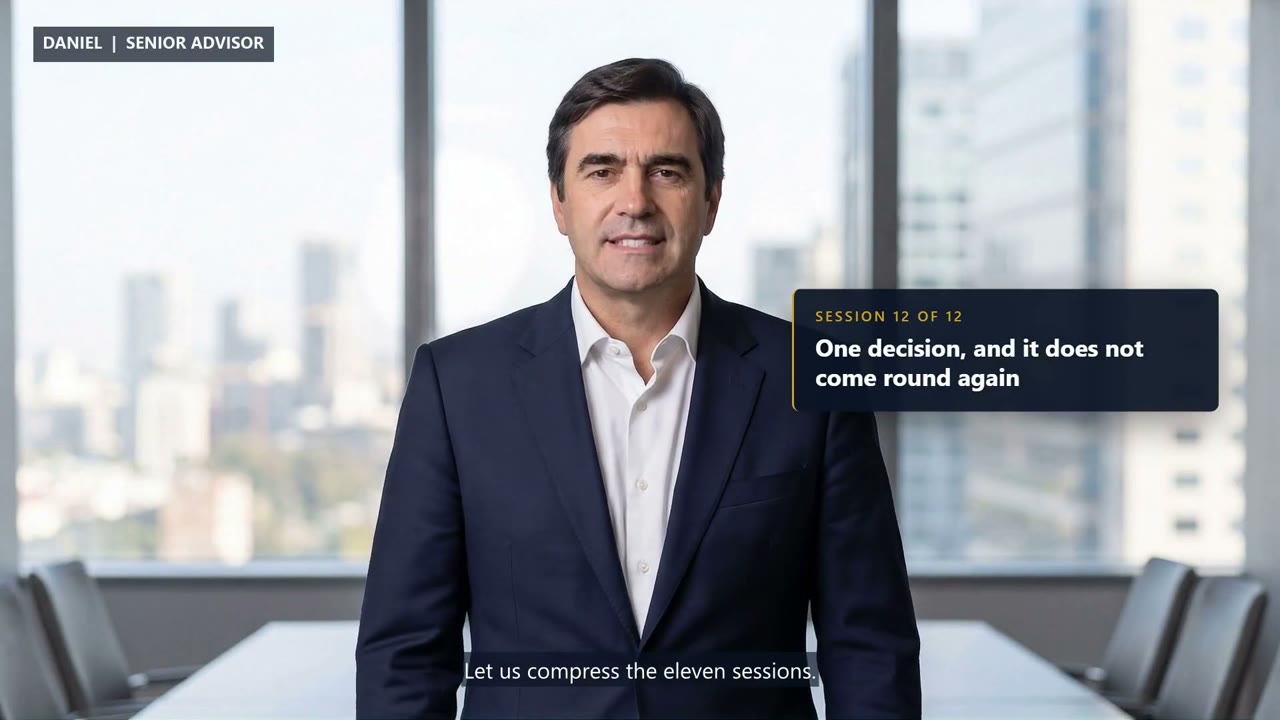 Watch the briefing · 4:37Choosing the Partner That Converts the EstateWhat the partner actually owns, where the cost variance sits, and the terms that keep the named team on the project.
How do you keep the team you evaluated?
By contracting the named conversion leads in the statement of work, with continuity through go live. Without that clause the assignment is discretionary.
Large practices staff from the bench
Named leads were swapped for available bench staff in roughly 1 in 3 deals where no continuity terms existed. Nobody breached anything; there was simply nothing to breach.
The wave planning that sits around the partner decision runs through the migration series.
The deadline pressure makes it worse
Budget drift concentrates where open scope meets a fixed external deadline, and the maintenance timeline published at the maintenance schedule is exactly that pressure. The pricing benchmarks sit in the benchmark reference.
Where the common advice on partner selection is wrong
The standard advice is to pick the partner with the biggest practice and the deepest reference list. We disagree.
Scale predicted delivery quality poorly
In most of the selections advised, raw scale predicted delivery outcomes badly while recent conversion depth and commercial transparency predicted them well. Large practices staff from their available bench, not their best conversion team.
The buyer side move is to contract the named conversion leads in the statement of work, with continuity through go live, rather than buying a logo and hoping the strongest team appears. The private cloud licensing mechanics sit in the private cloud licensing guide.
What the selections measured, 2024 to 2025
Two cuts of the selection file, and both are settled in the statement of work rather than in the negotiation.
Where the scope statement could not say what was in and out for custom code and document based access.
For available bench staff after signature, in every case where no continuity terms had been written into the contract.
Neither figure appears in a rate card comparison. Both are visible in the draft statement of work before anybody signs it.
Your first five moves
- Separate the licensing advice from the delivery contract, because 2 of 5 bundled offers carried a sizing conflict on the user count.
- Demand a line by line scope for custom code and document based access, since open scope statements drove 20 to 35 percent of budget drift.
- Contract the named conversion leads with continuity through go live, as leads were swapped for bench staff in roughly 1 in 3 deals without that clause.
- Score on recent conversions in your size band and sector, not on practice scale, which predicted delivery quality poorly across the selections.
- Lock the provider and region before signature. The SAP practice and the total cost calculator price the partner envelope before the shortlist closes.
Frequently asked questions
What does the delivery partner own?
The conversion, the custom code remediation and the functional change. The vendor operates the infrastructure and technical layer beneath that line.
Where does the cost variance sit?
In the partner choice rather than the subscription line. The conversion and application work above the vendor layer is where most cost and most risk live.
Why does bundling create a conflict?
Because a partner paid to resell the subscription has a built in interest in the sizing. About 2 of 5 bundled offers reviewed carried exactly that conflict.
How much does an open scope cost?
Between 20 and 35 percent of the original envelope. What the statement of work cannot name for custom code and document access becomes your cost.
Do the named leads stay?
In roughly 1 in 3 deals without continuity terms they did not. They were swapped for available bench staff after signature, with nothing in the contract to prevent it.
What should a partner be scored on?
Named recent conversions of similar size and sector, a fixed scope with written change control, independence from any resale, and contracted team continuity.
Does practice scale predict quality?
Poorly. Recent conversion depth and commercial transparency predicted delivery outcomes well; raw scale did not, because large practices staff from their bench.
What are the shortlist red flags?
A large discount conditional on buying the subscription through the partner, and a statement of work that cannot say what is in and out for custom code.
When is the infrastructure choice made?
At signature, and it should be locked there. The partner advises on provider and region for residency and latency, and moving it later is heavy and unbudgeted.
What is the single highest value clause?
Continuity on the named conversion leads through go live. It is the one term that makes the team you evaluated the team that delivers.